Dressing a Character
A wardrobe is a biography. How to dress an AI-native character so that every garment tells the audience who they are.


The characters that feel real are dressed with intention.
A character's clothes are the first sentence of their story. Before they speak or sing, before we know their name, we have already read them: where they come from, what they value, how they want to be seen.
For creators building AI-native characters, wardrobe is one of the most powerful and most overlooked tools available. It is too often treated as decoration, chosen image by image for whatever looks striking that day. The characters that feel real are dressed with intention.
Begin with the life, not the look
Before choosing a single garment, ask the questions a costume designer would ask. Where does this character live? What do they do on an ordinary Tuesday? What do they spend money on, and what do they refuse to? A character who grew up by the sea dresses differently from one raised in the city, even when both wear white.
The answers become a wardrobe: a set of fabrics, colors and silhouettes that belong to this person and no one else.
Build a palette and keep it
The most recognizable characters, on screen and off, have a palette. Three or four colors, a handful of textures, a consistent sense of fit. Within that palette there is endless variety, but the identity holds. Write it down and return to it every time you create a new image.
Let the clothes age
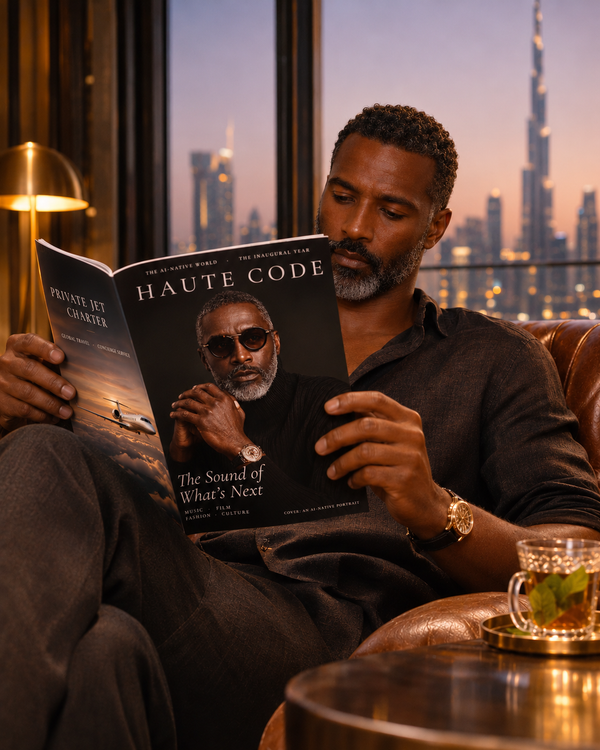
Real wardrobes have favorites: a jacket worn soft at the elbows, a watch that never changes, a shirt that appears again and again. Repetition is not a lack of imagination. It is how we come to know someone. Give your character pieces they return to, and let them show the wear of a life lived in them.
Dress for the moment
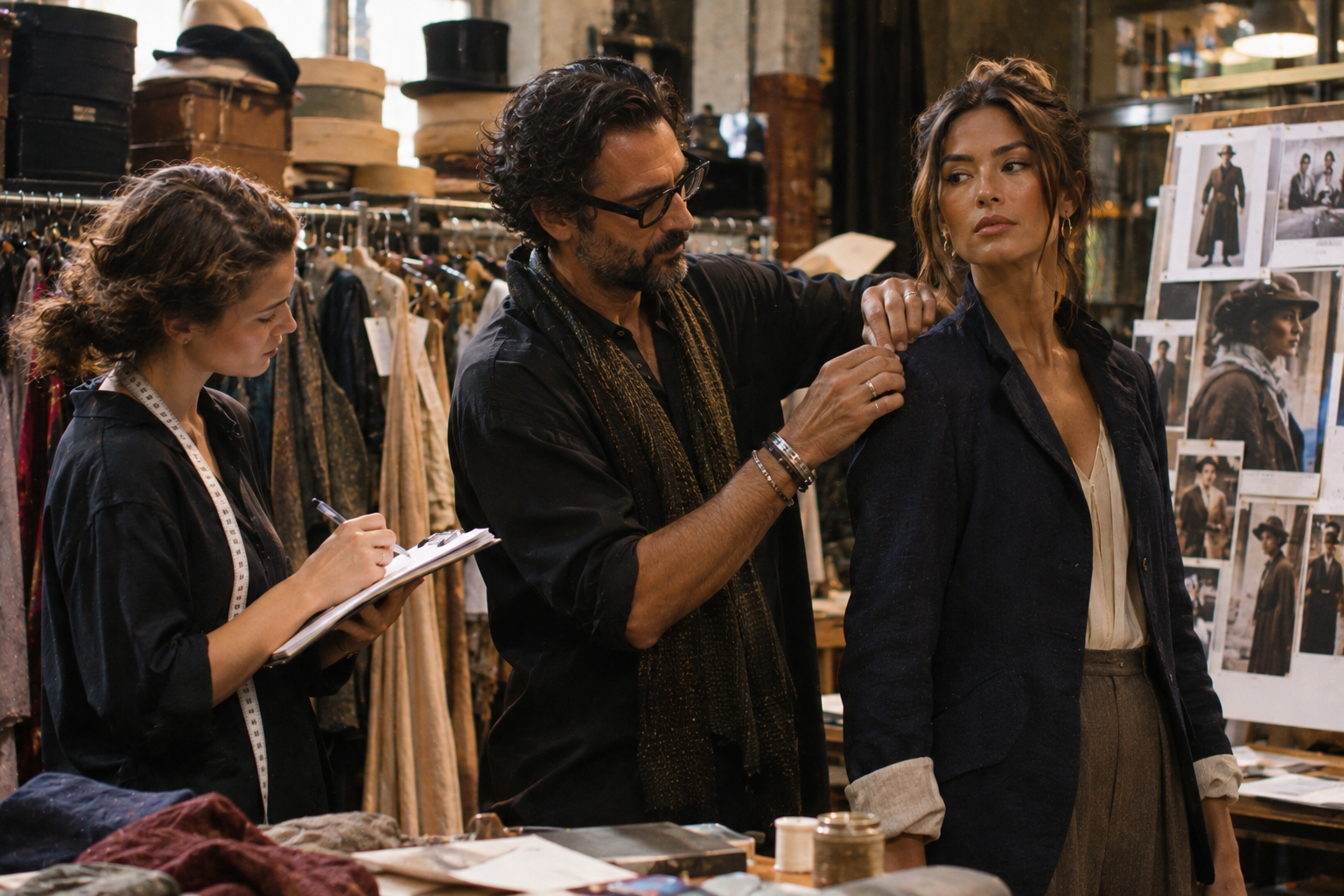
A character's wardrobe should respond to where they are: lighter on a coastal afternoon, sharper at an evening event, softer at home. The shifts tell a story of their own, and they make the world around the character feel lived in.
Wardrobe as continuity
There is a practical gift in all of this. A defined wardrobe makes a character consistent across images, which is one of the hardest things to achieve with AI tools. When the palette, fabrics and signature pieces are fixed, every new image feels like the same person.
Dress your character the way a good designer dresses a person: with attention to who they are, not just how they look. The audience will notice the difference, even if they never put it into words.
The Editors